Emily Giffin’s The One & Only

For her first novel with Random House, Emily Giffin’s The One & Only is, in some ways, quite a bit different from her other novels, revolving mainly around college football and the lives of those involved (directly or indirectly) in it. But, if you look beyond all of the sports discourse, you can see that, at its core, it is still a Giffin novel, just with love and relationships as a secondary focus instead of the main one.

The novel follows Shea Rigsby, a woman whose life completely revolves around football – something she has been passionate about since before she can remember. Her best friend, Lucy, is the daughter of famed college football coach Clive Carr, who not only is the head coach for Walker University – in the town of the same name that Shea grew up in – but also has been a role model and father figure to her due to her father’s absence. The Carrs are Shea’s second family, so when tragedy strikes them, naturally she empathizes and tries to do everything she can do to help them through it. But, with tragedy comes reflection; it’s what makes people reexamine their lives and make changes that they wouldn’t have done otherwise, and Shea is no different in that aspect. Maybe Walker isn’t everything. Shea makes big changes in both her personal and professional lives that, although seem to be the right paths for her, ultimately leave her wondering: what if everything she could ever want or need was there all along. What if Walker really was everything?

There is a major focus on football, but does it work for Giffin? Can her fans get passed the overwhelming assault of an emasculating sport or will they be thoroughly disappointed? Although I was slightly taken aback as to the sheer volume at which football comes into play in The One & Only, I think her writing stands for itself. What I love about Giffin novels is their ability to make me not only feel for and relate to the characters in the story, but also, their ability to make me turn inward and self-reflect. So many of us have aspects of our lives that we are not happy with, whether it be a job that doesn’t interest us, a love life that doesn’t challenge us, or just a melancholic feeling towards ourselves in general. Sometimes, changes have to be made in order for us to be happy, but often times, it’s just more a matter of changing our perception on things, as Shea experiences. Sometimes you need to take a step outside of yourself and your life to realize that everything you ever could have wanted has been there the whole time.

Sometimes you only get one shot. Sometimes you don’t have the luxury to think or wait or plan. Sometimes you have to reach out and seize your moment. Your best, last, or only chance.”

IMG_1956.JPG

Morgan Matson’s Second Chance Summer (YA)

Every so often something comes along that really tugs at my heart, and Morgan Matson’s Second Chance Summer is one of those novels. Categorized as young adult fiction – perhaps because the protagonist is a teenager – the novel follows Taylor alternating narratives between the present day and events that happened five years in the past.

What would you do if a loved one was dying and you could do nothing to stop it? Would you run away from it, or would you have the strength to face it head-on? In Second Chance Summer, we see a family that appears normal on the surface, but underneath is struggling just to make it through each day.

On Taylor’s birthday, her parents sit her and her siblings down, and inform them that their father has just been diagnosed with stage IV pancreatic cancer, with only four months left to live. The family decides to go back to their summer lake house in the Poconos – which they’ve rented out for the past five summers – to have one last summer together and bond as a family while they still can; something that none of them are used to doing, as they are all closed off and rarely speak about their emotions with one another. Taylor, in particular, has a habit of running away from things that frighten her, love, friendship, anything emotional. Five years ago, she ran away from the lake house and the two people that she was closest to in the world. Will Taylor be able to face her past and her father’s rapidly deteriorating health, or will she do the one thing that is most natural to her? Will she run away?

Second Chance Summer is about many things, but I think the most prominent theme is time and how it runs out. Without warning. You can’t run away from time any more than you can run away from pain or heartache or the possibility of falling in love. Time doesn’t wait until you’re ready, it keeps moving, ticking away the hours. In one way or another, we are all guilty of running away from something or someone, but, like Taylor realizes in the novel, there are some things that, no matter what you do, you just cannot run away from. You have to stand still. And, by choosing to face it, you will become stronger.

IMG_0004.JPG

Laura McBride’s We Are Called to Rise

Published last month by Simon & Schuster, Laura McBride’s debut novel, We Are Called to Rise at its core, is a story about hope and innocence, and trying to preserve hope when innocence is lost. Told in four alternating narratives, we are introduced to a different side of Las Vegas, one that humanizes it and shows you that, in most ways, it is just like everywhere else.

Bashkim is an eight year old boy whose parents immigrated to the US from Albania and own an ice cream truck as a means to providing for the family. Bashkim has a younger sister, Tiriana. They are very poor, often are behind in their bills and sometimes cannot afford to eat. Bashkim’s parents are very old world and there are cultural differences which they cannot understand – although, it could be more a refusal to accept rather than a complete incomprehension. This causes problems for the family from time-to-time, and is the key component to what is essentially the disembodiment of the family.

Luis is an Iraqi war veteran, who’s at a hospital in Washington DC while he recovers both physically and mentally from injuries sustained overseas, and from events that haunt him. Through Bashkim’s school, Luis and Bashkim become pen pals, sending letters back-and-forth. Though neither of them is completely truthful with each other, the letters somehow are able to help both of them in the end.

Roberta is a social worker that really gets into her job, the kind that is affected by the kids that she cannot save, and she cannot save them all. When Bashkim’s life falls apart, she is assigned his case and goes above and beyond, doing everything in her power to bring a little bit of peace to Bashkim and what’s left of his family.

Avis is the mother of Iraqi war veteran, Nate, who is a new member of the Las Vegas Police force. Amidst her crumbling marriage and, subsequently, her life, she sees changes in her son from his last deployment, ones that could become a hindrance given his new place of work. She fears for what her son will do, but is she strong enough to take action towards getting him the help he needs, or will someone fall victim to his mental instability?

We Are Called to Rise, is a brilliant novel about misunderstandings and second chances, and how quickly one’s life can be turned upside-down and forever changed. Simply put: it is amazing, and it has the power to stay with you long after you have finished it.

“There are times when all this pain, all these misunderstandings, all this hatred, has made me wonder if we deserve this beautiful world; if we human beings should really be left in charge of it. But if, sometimes, an unspeakable horror arises from the smallest error, I choose to believe that it’s possibly for an equally unimaginable grandeur to grow from the tiniest gesture of love. I choose to believe that it works both ways. That great terror is the result of a thousand small but evil choices, and great good is the outcome of another thousand tiny acts of care.”

20140728-090816-32896561.jpg

“All that matters in this life is that you try. All that matters is that you open your heart, give everything you have, and keep trying.”

-Taylor Jenkins Reid, After I Do

Facial Care By the Season?

Recently, I was reading an article on Vogue.com about a different way to care for your skin: by the season. The concept makes sense, as I find myself using a lightweight moisturizer in the summer and a heavier one in the winter. I had never thought about moisturizers and other facial products being created for each season, catering to the different needs of the skin with the rise and fall of temperatures and humidity. And, as I have gotten more and more conscious about my skin – especially over the past year – this is the kind of thing that I would want to try.

One company that is creating these products is de Mamiel. They have developed season facial oils that are designed to give your skin exactly what it needs with each season. Their Summer Facial Oil helps to heal and protect skin from the overexposure to the sun that happens in the summer, and helps to rehydrate and rebalance your skin, among other things. Their Autumn Facial Oil – which you can preorder now and will be available September 22nd – regenerates your skin from the summer months, focusing on complexion and moisture. Their Winter Facial Oil focuses mainly on protecting your skin from the cold and drying elements and the Spring Facial Oil focuses on renewing and brightening the skin.

Based in the UK, de Mamiel products are available online through demamiel.com and shen-beauty.com, the second of which will ship the products for free. The facial oils are a bit pricey at $110, but if you are as skin-health conscious as I am, they might just be worth the cost. And, since I am already trying out a few facial products courtesy of the Body Shop this summer, I’m going to wait till the next season and order the Autumn Facial Oil. It just might change my life.

20140717-090256-32576632.jpg

Sarah Pekkanen’s Catching Air

If you had the opportunity to leave everything behind and start a new life, would you take it? In Sarah Pekkanen’s new novel, Catching Air, she writes about two couples tied together through blood and little else, who embark on such a journey, and a mysterious woman who joins them with secrets of her own.

Kira was an associate at a law firm in Florida and was so stressed and overworked that she barely had time to do anything else. Her husband Peter had different jobs here and there, but it was Kira who was the bread winner. Then comes the phone call for them to join Peter’s brother Rand in Vermont to help run a bed-and-breakfast, and the normally practical couple decide to make the leap. Little did they know that it wasn’t going to be as simple as it sounded, and issues that they had long buried would start surfacing.

When Alyssa and Rand decided to buy the bed-and-breakfast, they thought it was going to be like every other one of their adventures – something they would do for a short period of time until they grew bored, then leave it behind and venture onto the next thing. But, even for the world’s most carefree couple, life gets in the way. Will they be able to make it or will it be the thing that tears them apart?

Then there’s Dawn, a young woman who fled from a bad situation and ended up at the bed-and-breakfast in Vermont. Will she be able to safely start a new life or will her past come back for her?

Catching Air is about people at a crossroads in their lives, which is why I think that it is so appealing. We all reach them, some not as obvious as others, but, every time we have to make a decision, whether it be getting a new job, ending a relationship, moving, we don’t realize just how much it will impact our lives. It is the way we behave and the choices that we make that make us who we are, that allow us to fail or succeed, which is what Pekkanen is showing us. Running away doesn’t solve anything because you’re not really making a decision as much as you are avoiding it, which only works for so long. You can’t run away from life. You always have to make a decision in the end.

20140707-091051-33051926.jpg

Finding Beauty in Our Scars

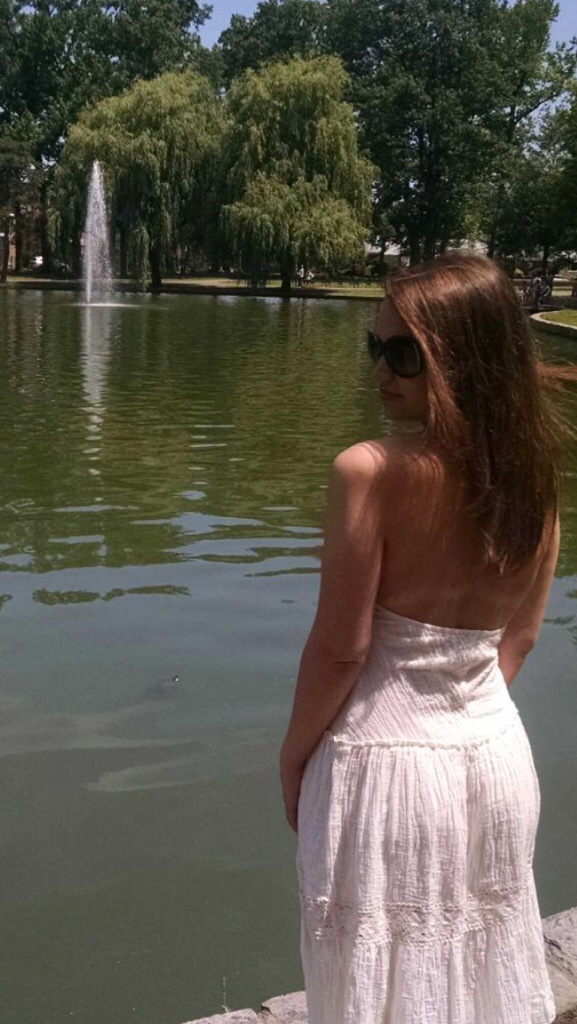
While looking at pictures from this past weekend, I finally figured out what was different about myself, what I no longer recognized. Throughout my life, one of my favorite parts of my body – despite having scoliosis – was my back. I loved the beauty marks that adorned it, especially one in particular. There’s a photograph of me taken at a charity event three years ago. In it, I’m wearing a backless Chanel dress, my head turned over my shoulder so you can see the dress in all its resplendent. My skin is glowing from a recent trip to the beach, and I’m confident, happy and carefree. That night didn’t turn out the way I had expected. I remember being stood up and leaving the event later (earlier?) than I had intended, but at that moment I felt beautiful.

Early last year, after a trip to the dermatologist office where they removed my beloved beauty mark for a biopsy, the results were not good. Not only had it been a necessity to get the biopsy, but it became a life and death matter to have the rest of it removed completely. The beauty mark that I had had all of my life had turned on me. Not only was it cancer, but it was the most dangerous kind. Me, the girl who, at twenty-eight (nearly twenty-nine) had never broken a bone, never had stitches, never had a cavity, was about to experience one of those three (more than once), immediately scheduling surgery for the following day. After excruciating pain, a frustratingly slow recovery and many trips to the dermatologist office since, my body has never been the same.

In place of my beauty mark is a two-plus-inch long scar, and this past weekend was the first time that I had a picture taken of me showing off my back since the surgery. It’s not that it was hard to look at the scar, as I’ve been acquainted with it for over a year now, but it was more that the absence of the beauty mark made my back look foreign, as if it belonged to a different person entirely.

In some ways, my scar does belong to someone else. I’m not the same person that I was three years ago or even fifteen months ago. Things have happened in my life that have changed me, as it does all of us. Some scars – like the one on my back – we can see, while others are less visible but can still cause us the same amount of pain or greater. It is the culmination of all of those scars that make us who we are today. Without them, we would be lost in a sea. So, the next time you think that your scars are ugly, remember the opposite. Our scars are beautiful because they remind us that we are alive and show us our hidden strengths, that if we can overcome that, we can get through anything.

Our scars are beautiful; they are unique, as we all are.

20140625-094320-35000393.jpg

Emily Liebert’s You Knew Me When

Once you’ve left, can you ever, really go home again? Emily Liebert attempts to answer these questions and others in her debut novel, You Knew Me When, a story about best friends, loves, and what happens when life gets in the way.

Katherine left home 12 years ago to pursue a career in the beauty industry. It had been a tough decision for her, leaving her best friend Laney and her boyfriend Grant behind, but it had been a once in a lifetime opportunity that she couldn’t pass up. All these years later, she is a top executive for one of the biggest cosmetic companies in the world, but she never heard from Laney or Grant again. Now, at the passing of an old friend and mother figure, Katherine is forced to go back to the ones she left behind and confront the issues of years past. Will their old bond be able to break through the wall that was built up between them, or is it simply just too late?

Are there some relationships that are strong enough to get passed years of hurt and regret? Can the bond of former best friends be tied back together once it’s been cut? They are questions that we’ve all wondered about at one point or another in our lives and ones that come up again and again in You Knew Me When. Our former best friends, people that we were once inseparable from, people that we now look back on with a mix of fondness and longing. Kind of like the one who got away but sans the romantic entanglement. What if you took a leap in a direction that your best friend couldn’t understand and ended up losing them in the process? Would you bury the longing in your heart and continue moving forward, or would you try everything in your power to get that friendship back?

20140624-090929-32969840.jpg

Inspiration From Your Adolescence

I don’t know what possessed me to do this, but recently, I paid homage to my youth by re-watching all six season of Dawson’s Creek. It was one of my favorite shows back in the day, and to be frank, still kind of is. One of the things that I really love about this show, is how profound it is. There will be scenes with all of this amazing dialogue that you can really take with you and use in your own life, dialogue that can change your whole way of thinking about a situation. I realize that this is also a reason why people criticized the show, that the dialogue is not how anyone speaks in real life and that it took away from the genuinity about it. In some ways, they are half true. The speech that is used, especially in the earlier seasons is a bit unrealistic, and I could see how that could confuse some people, or send others running for the dictionary, but why does that have to be a bad thing and take away the meaning of the show? If the words have the ability to change your life, I think that is a good thing.

I remember watching this show as a teenager and feeling comforted but not completely understanding why. Growing up, my home-life was not great, and I used the show as an escape, imagining myself being there, kind of like what I always did (and still do) with books. After re-watching the series, I realized that Dawson’s Creek was so much more than a get-a-way: if you let it, it actually has the power to enlighten and inspire you…as an adolescent and as an adult. It touches deep into your core, saying the things that you’re either too afraid to hear, or too afraid to say. And, although I couldn’t quite appreciate its greatness back then, I have no doubt in my mind that, on some level, I knew it was special. Dawson always said that he believed that you could find the answers to all of life’s questions in a movie. I’m not sure if that is really true, but, I think that this show succeeds in doing that in some ways.

As I was watching, I joked to Melissa that in some ways it felt like a therapy session; full of advice that (seemed) catered towards me. And, I think that, if given a chance, it can do the same thing for anyone regardless of your age. It’s one of those shows that can transcend the generation gap. The quote below is truly amazing.

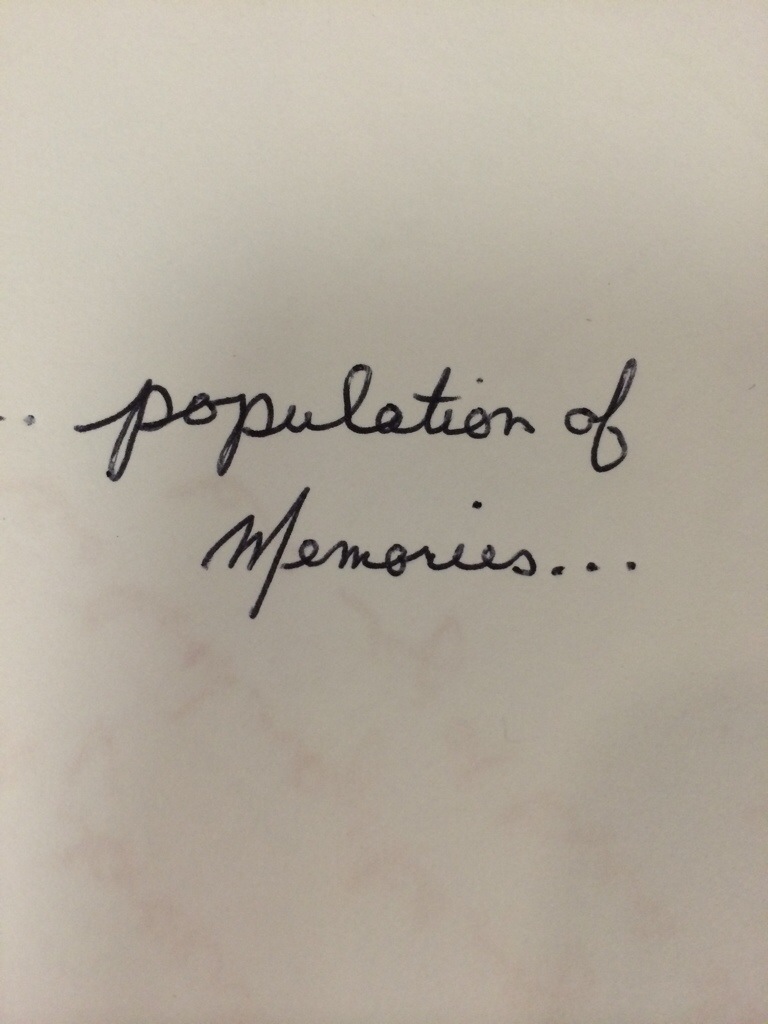
“There are people in my life who are gone now. People I miss very much, and people who I am haunted by in different ways. But whether we’re separated by death or merely distance, I know that they’re still with me because I keep them in my heart. The truth is, in time, that’s all we’re going to be to each other anyway, this population of memories…some wonderful and endearing, some less so. But taken together, these memories help make us who we are and who we will be.”

20140617-135404-50044989.jpg

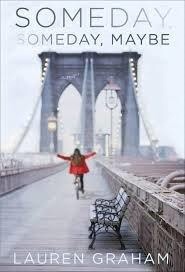
Lauren Graham’s Someday, Someday, Maybe

In Lauren Graham’s debut novel, Someday, Someday, Maybe, we follow Franny Banks, as she tries to make ends meet in this cute, coming of age story about deadlines, crushes and what it means to be a struggling actor. Franny has a self-imposed deadline that ends in six months, yet all she has to show for herself is one commercial, a waitressing job she can’t stand, and a depleting bank account. With an agent that won’t return her phone calls, will Franny be able to meet her deadline, or will she have to return home to her dad and figure out a plan B?

What’s great about this novel is that you don’t have to be interested in acting or in “the business” to relate to Franny, because the real issue that she is struggling with is growing up and learning about herself. We have all been there. We have all struggled (some more than others) to get the job we want, struggled to be noticed by that person we love, struggled with our identity, and in Someday, Someday, Maybe, Graham reminds us of this. But she also reminds us that if we keep persisting and don’t give up, we can achieve life changing opportunities. Anything is possible.

20140609-135518-50118206.jpg